


 | ||
|
| ||
News |


|
| Common Buying Mistakes When Sourcing Silicone Anti-slip Elastic | |
2026-07-08 13:12:01 | |
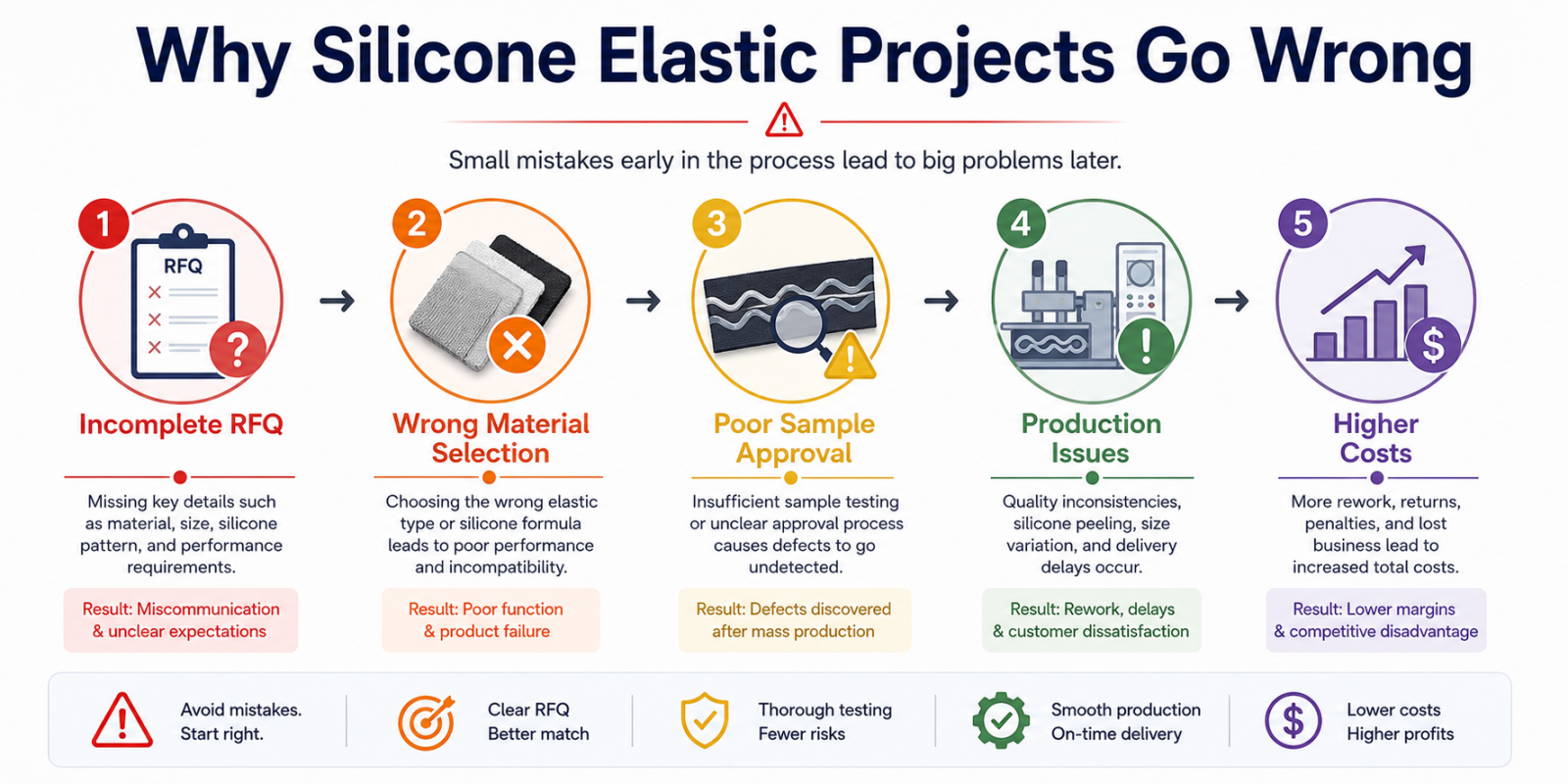
Avoid Costly Procurement Errors Before Production BeginsSelecting the right silicone anti-slip elastic is about more than comparing prices or choosing a supplier with the shortest lead time. For apparel manufacturers, sportswear brands, lingerie companies, and OEM buyers, purchasing decisions directly affect garment performance, production efficiency, product consistency, and customer satisfaction. Many sourcing issues—including insufficient grip, inconsistent elasticity, color mismatches, delayed deliveries, and unexpected quality problems—can often be traced back to decisions made before production even begins. Fortunately, most of these risks are preventable with proper planning and supplier communication.
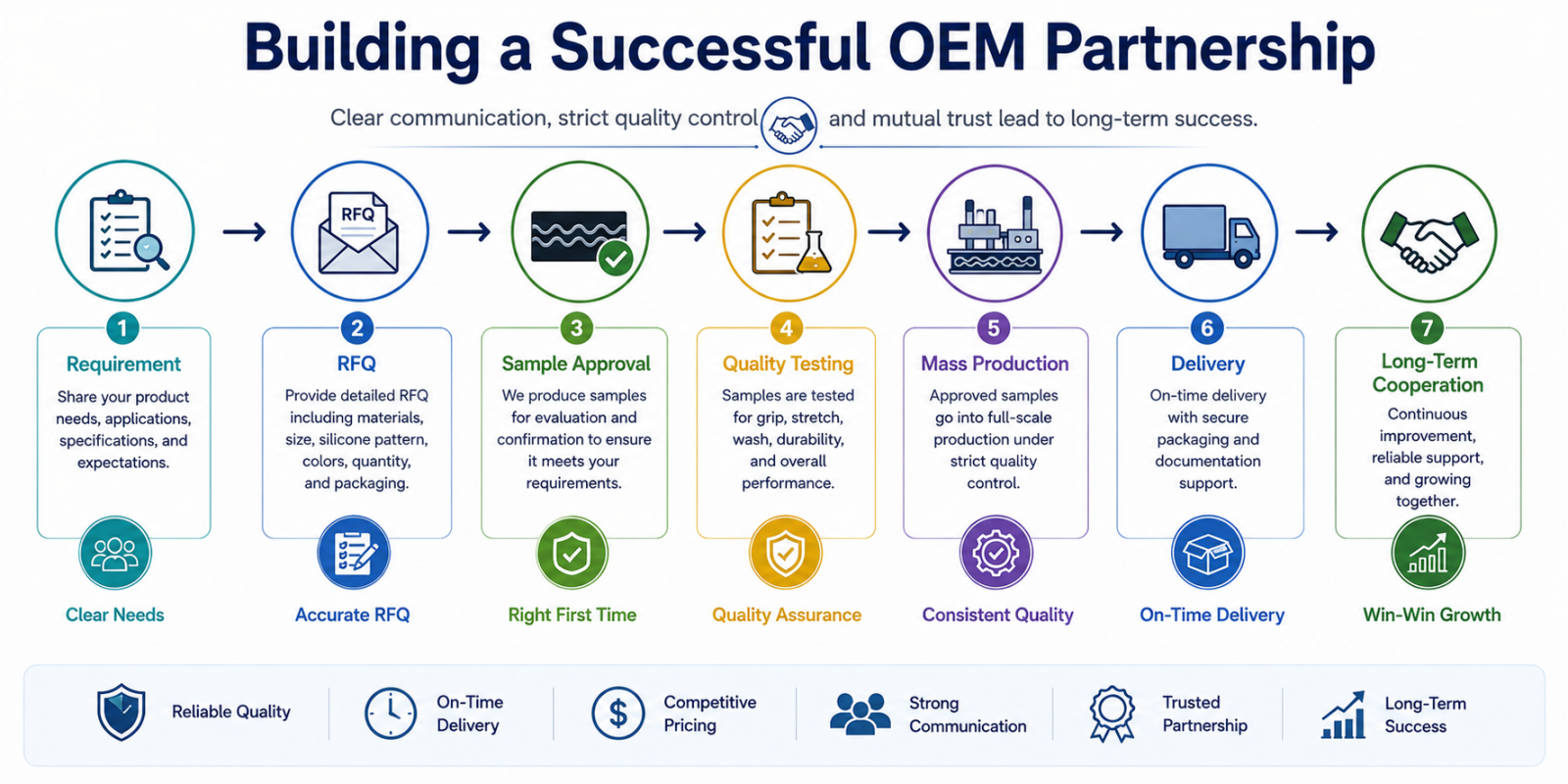
In this article, we'll review the most common buying mistakes when sourcing silicone anti-slip elastic and explain how procurement teams can reduce risk, improve quality, and build more reliable OEM partnerships. Quick SummaryBefore placing an OEM order, experienced buyers typically:
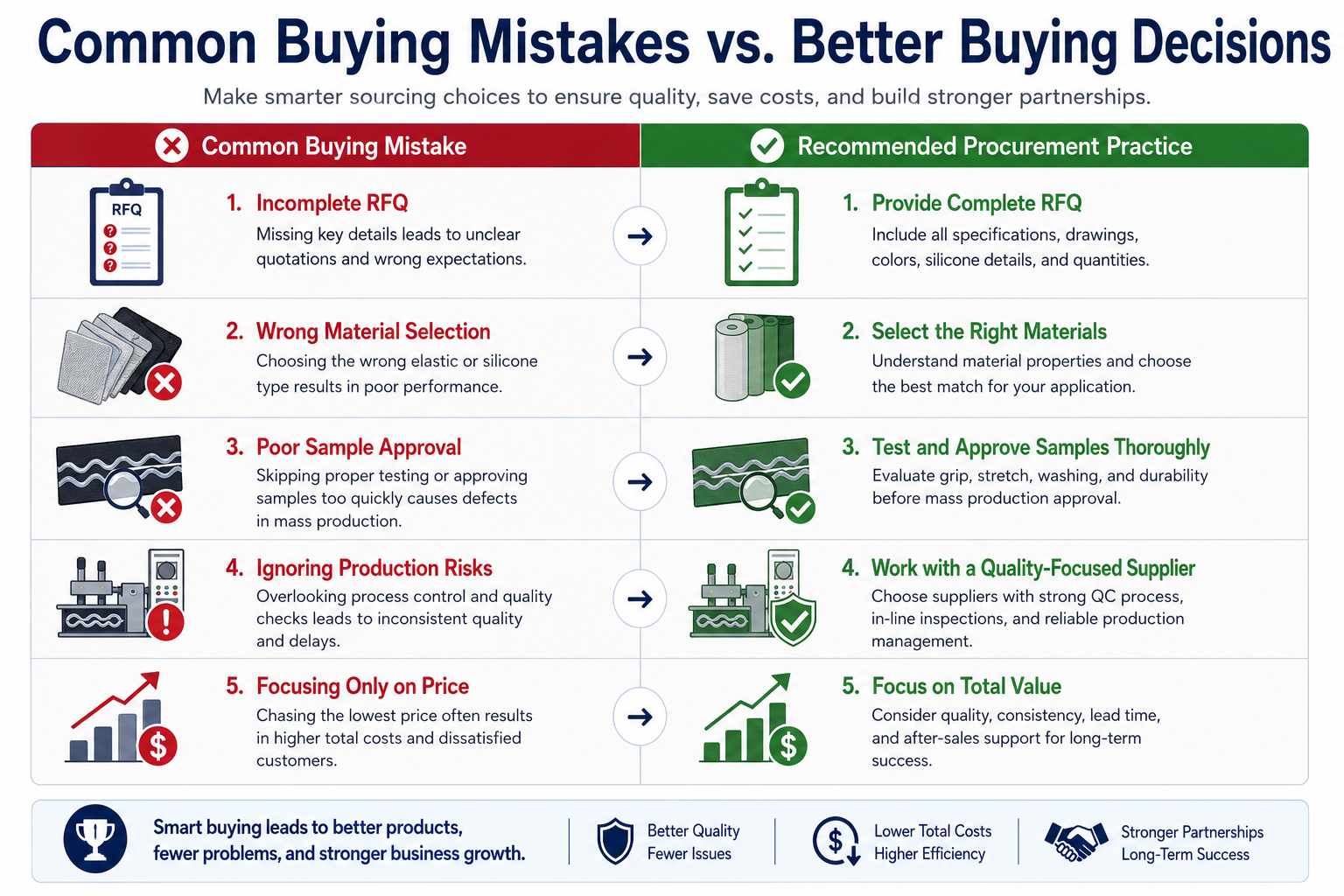
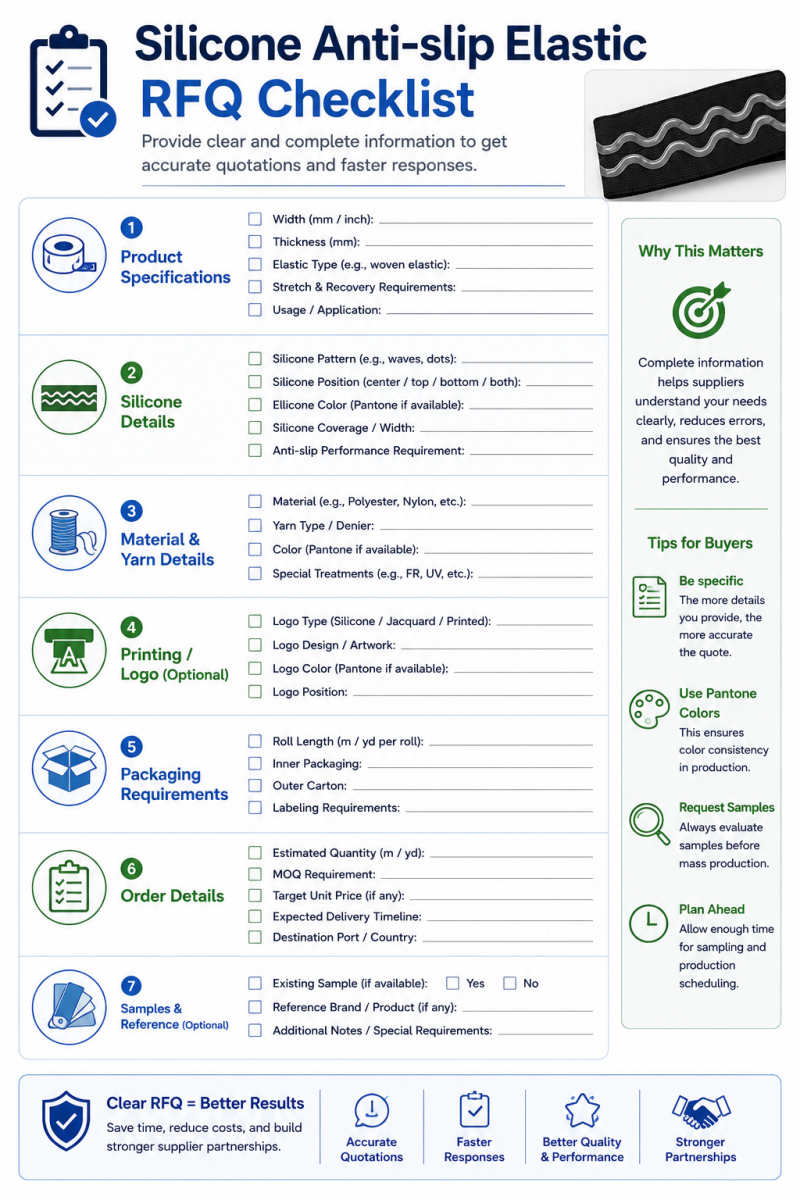
Following these steps can significantly reduce sourcing risks and improve long-term purchasing results. 7 Common Buying Mistakes Buyers Should Avoid1. Choosing the Lowest Price Instead of the Best ValueThe lowest quotation rarely represents the lowest total cost. Lower-quality silicone formulations, unstable elastic performance, or inconsistent production can lead to product returns, customer complaints, and additional manufacturing costs. Experienced buyers evaluate overall value, including durability, quality consistency, communication, and production reliability. 2. Ignoring the Importance of Silicone Pattern DesignNot all silicone printing delivers the same grip performance. Pattern shape, silicone coverage, printing thickness, and garment application all influence anti-slip effectiveness. A pattern designed for sportswear may not perform well on underwear or medical garments. Choosing the correct silicone pattern is just as important as selecting the elastic itself. 3. Sending Incomplete RFQ InformationMany production delays begin with incomplete inquiry information. A professional RFQ should include:
The more complete the information, the faster and more accurate the quotation process becomes. 4. Skipping Sample EvaluationApproving production samples helps verify:
A short sampling stage often prevents expensive corrections during mass production. 5. Overlooking Quality TestingVisual inspection alone cannot guarantee consistent performance. Professional suppliers should conduct appropriate testing such as:
Testing reduces production risks and improves long-term product consistency. 6. Underestimating Lead Time and Production PlanningProduction schedules depend on multiple factors, including:
Early planning helps avoid unnecessary delays and supports smoother production management. 7. Selecting Suppliers Based Only on PriceSuccessful OEM cooperation depends on much more than pricing. Reliable suppliers provide:
Long-term supplier relationships often create greater value than short-term cost savings. Buyer RFQ Checklist Before ProductionBefore requesting a quotation, prepare the following information: ✓ Product application ✓ Elastic width and material ✓ Silicone pattern requirements ✓ Pantone color reference ✓ Logo artwork (if applicable) ✓ Packaging specifications ✓ Estimated order quantity ✓ Required delivery schedule ✓ Testing requirements
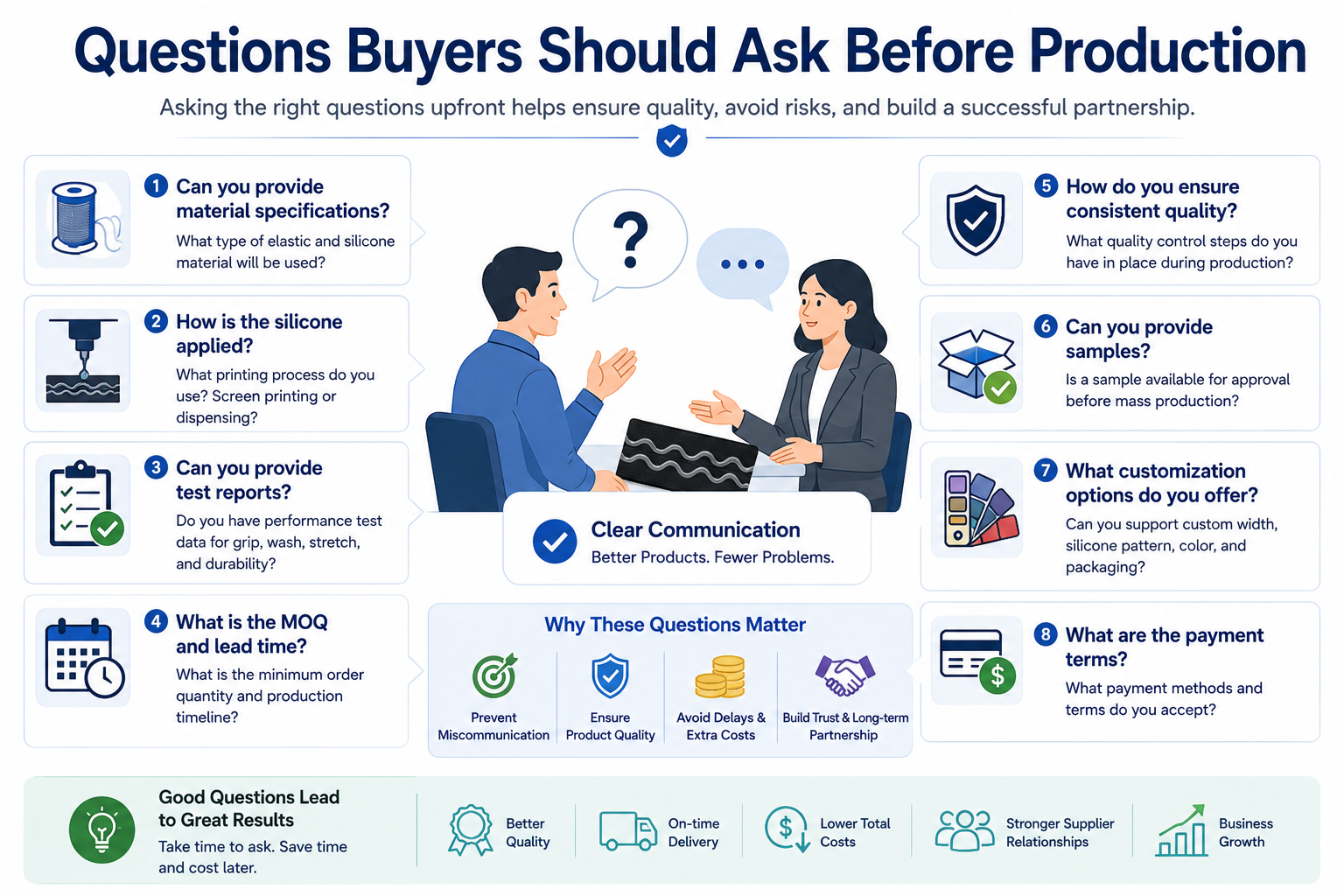
Providing complete specifications allows suppliers to recommend suitable materials, estimate lead time accurately, and prepare more precise quotations. Questions Every Buyer Should Ask Before Choosing a SupplierAsking the right questions early can prevent misunderstandings later in the project. Consider asking:
These questions help buyers evaluate supplier capabilities beyond pricing alone. Final ThoughtsSuccessful sourcing is rarely determined by price alone. The most reliable procurement results come from careful planning, complete RFQ preparation, supplier evaluation, sample approval, and consistent quality management.
By avoiding these common buying mistakes, buyers can reduce production risks, improve product performance, and establish long-term partnerships with experienced silicone anti-slip elastic manufacturers. Continue Your Silicone Anti-slip Elastic Buyer GuideTo learn more about successful sourcing and OEM manufacturing, continue with our complete buyer guide series:
Next Article (Part 9): How to Choose the Right Silicone Anti-slip Elastic Supplier |
 |
Fu Jyi Lin Enterprise Co., Ltd. Copyright © 2014 |
| Address: 10071 No.17-1, SHAU ANN St., Zhongzheng Dist., Taipei City 100, Taiwan (R.O.C.)
TEL:886-2-2301-5900 , 886-2-2307-0952 FAX:886-2-2307-5424 , 886-2-2332-6930 E-Mail:info@fujyilin.com.tw |